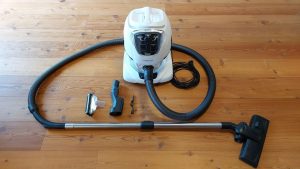
Noaton bietet Geräte für jeden Haushalt. Die Geräte sollen modellabhängig Luftqualität, Sauberkeit oder Temperatur von Wohnung und Haus verbessern. Noaton ist für die Produktion qualitativer Geräte bekannt und bietet die Artikel zu einem guten Preis-Leistungs-Verhältnis an. Nachfolgend werden die Luftkühler Noaton AE 6160 und HF 3110 vorgestellt.
Noaton AE 6160 – ein Luftkühler und Luftbefeuchter
Wenn Sie ein Gerät suchen, das die Luft kühlen und zudem befeuchten kann, dann ist der Noaton AE 6160 für Sie interessant. Das Geräte kann zur wirtschaftlichen und effektiven Lufterfrischung genutzt werden und kann sich durch die Befeuchtungsmöglichkeit positiv auf die Atemwege auswirken.
Funktionalität und Eigenschaften
Der Luftkühler von Noaton ist für Räume bis zu einer Größe von 25 m² geeignet. 400 m³ Luft nutzt der Kühler pro Stunde. Der Artikel ist kompakt gebaut und kann, dank der integrierten Räder, schnell von einen Raum in den anderen Raum gefahren werden. Ein Touchpanel erleichtert die Bedienung des Gerätes. Des Weiteren können Sie den Noaton AE 6160 auch über eine Fernbedienung steuern. Auf dem Gerätedisplay kann die aktuelle Raumtemperatur abgelesen werden. Der Luftkühler und Luftbefeuchter ist mit einem Timer ausgestattet. Dank der Swing-Funktion kann die durch das Gerät gekühlte Luft problemlos im Raum verteilt werden.
Der Noaton AE 6160 wird als Alternative zu einer Klimaanlage genutzt und ist vergleichsweise günstig. Das Gerät arbeitet geräuscharm und ist simple zu bedienen. Die Kühlung kann über Tasten problemlos auf den gewünschten Grad eingestellt werden. Die Geschwindigkeit der Lüfter kann ebenfalls über die Tasten reguliert werden. Sie haben die Wahl zwischen hoch, mittel und niedrig.
Weitere Informationen
Der Noaton AE 6160 verfügt über einen großen Wassertank, der 6 Liter fast. Das Gerät kühlt mehrere Stunden mit einem vollen Wassertank. Es erfolgt eine automatische Ausschaltung, wenn der Wassertank leer ist. Die Befeuchtungskapazität wird mit einem Liter pro Stunde abgegeben.
Noaton HF 3110 – Luftbefeuchter und Luftreiniger
Der Noaton HF 3110 ist ein flexibles und leistungsstarkes Gerät. Der Energieverbrauch ist mit 65 Watt vergleichsweise niedrig, weshalb der Luftbefeuchter für ein umweltbewusstes Zuhause geeignet ist. Das Gerät ist für Raumgrößen von 15 m² bis zu 25 m² bei einer Raumhöhe von 2,6 m gedacht. Der Luftbefeuchter besitzt einen Wassertank mit 6 Litern Fassungsvermögen und ist mit einem Verdampfungsfilter ausgestattet. Die Befeuchtungskapazität liegt bei 1 Liter pro Stunde.
Funktionalität und Eigenschaften
Der Luftbefeuchter wird auch zur Luftreinigung eingesetzt und kann zu einem besseren Raumklima beitragen. Durch die Kombination aus Verdunstungsfilter und Pumpe sorgt das Gerät zudem für angenehm kühle Luft. Der Luftbefeuchter ist mit Rädern ausgestattet, wodurch das Gerät beliebig in jeden Raum gefahren werden kann. Durch die kompakten Abmessungen von 30,9 cm x 22,9 cm x 47,8 cm passt es auch in kleine Räume. Das Gerät ist über ein Touchpanel steuerbar. Sie können Lufttemperatur und Abschaltzeit des Gerätes auf dem Touchpanel ablesen. Eine Fernbedienung erleichtert die Bedienung zusätzlich.
Weitere Informationen
Das gerät verfügt über eine horizontale Swing-Funktion. Diese erlaubt eine Luftlenkung durch Lamellen. Der Noaton HF 3110 schafft einen Luftdurchsatz von 400 m³ pro Stunde. Das Gerät bietet eine natürliche Feuchtigkeitsregulierung und ist mit einem Nachtmodus ausgestattet. Durch den integrierten Timer kann eine automatische Abschaltung erfolgen. Mit einem Gewicht von 4,8 kg ist es ein leichtet Gerät, das auch problemlos eine Treppe rauf und runter getragen werden kann. Der Artikel befeuchtet den Raum nicht nur, sondern trägt auch zur Kühlung bei. Der Noaton HF 3110 bietet eine komfortable Temperaturanzeige, auf der Sie jederzeit die IST-Temperatur des Raumes ablesen können. Eine Regulation der Raumtemperatur kann bequem über das Bedienfeld des Gerätes erfolgen. Sie können den Raum auf die gewünschte Temperatur herunterkühlen. Das Gerät ist eine kostengünstige, kompakte Alternative zu einer teuren Klimaanlage.
Gesamturteil
Beide Geräte sind von der Funktionsweise sehr sehr ähnlich. Nach unserem Test können wir beide Geräte uneingeschränkt empfehlen. Gerade das Preis- / Leistungsverhältnis ist sehr gut!